


A newsletter is a recurring email sent to a list of subscribers, delivering news, insights, curated content, or updates on a specific topic. Unlike promotional blasts or transactional emails, newsletters build an ongoing relationship with readers by consistently showing up in their inbox with something worth reading.
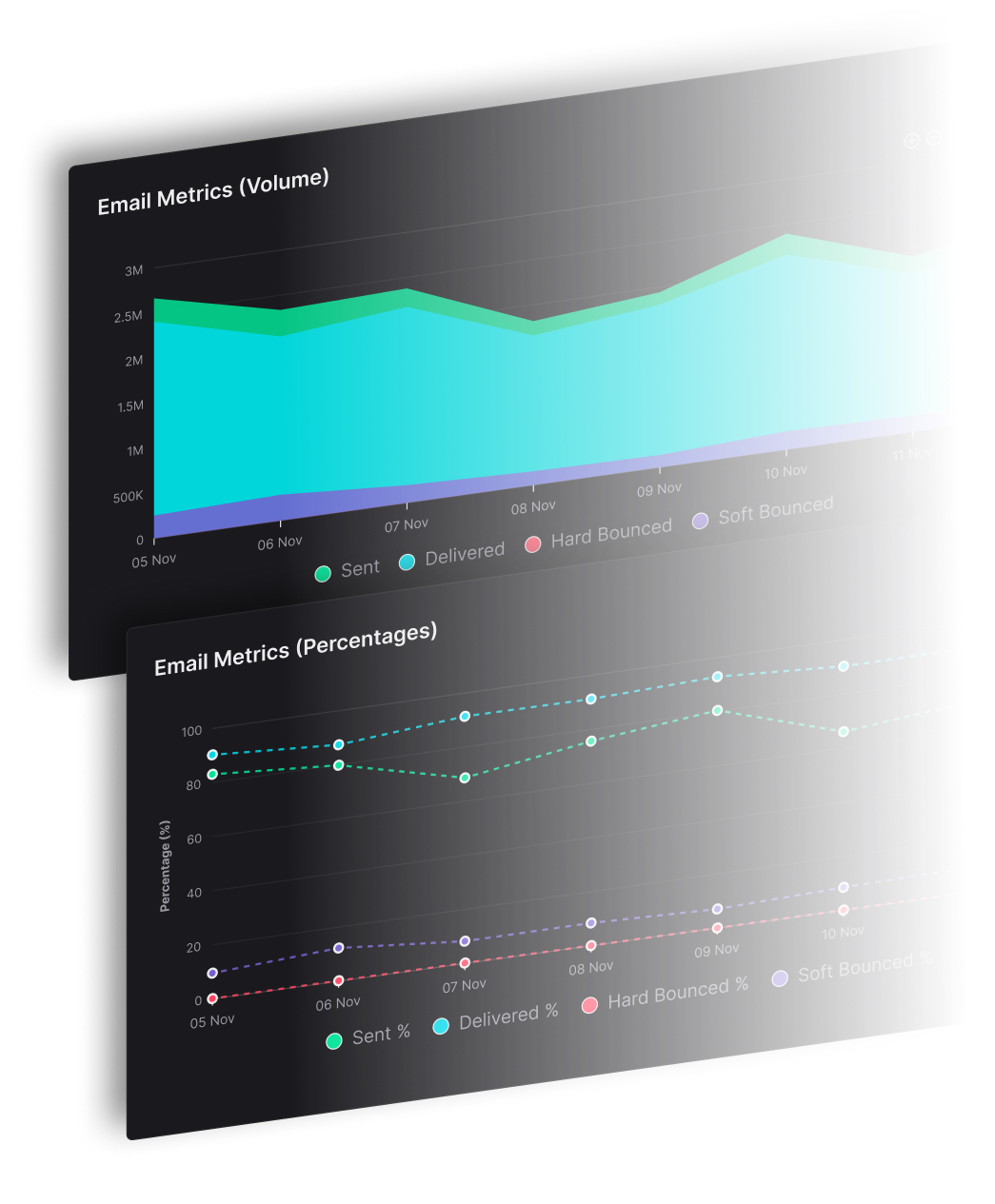
At SendX, we've processed 4.4 billion emails for over 3,000 businesses. The pattern is clear: companies that send a consistent newsletter retain subscribers longer and convert them more often than companies that only send promotions.
Newsletter Definition
A newsletter is a regularly distributed email publication containing curated news, updates, or content sent to opted-in subscribers on a consistent schedule — typically weekly, biweekly, or monthly.
Key Takeaways
- A newsletter is a recurring email that delivers value to opted-in subscribers on a regular schedule
- Email marketing generates $36 for every $1 spent (Litmus, 2025), with newsletters driving long-term subscriber engagement
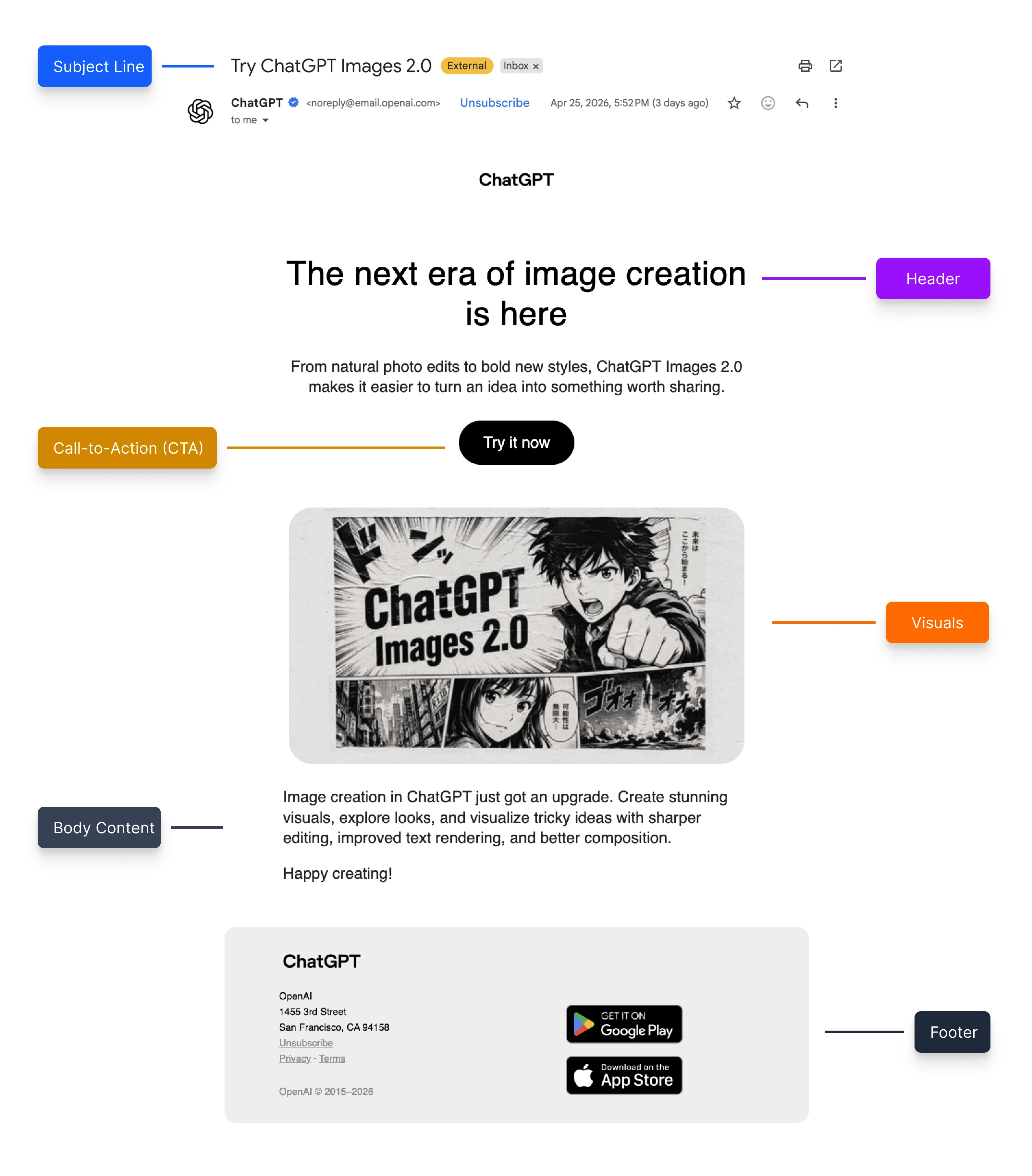
- The 6 essential elements: subject line, header, body content, visuals, CTA, and footer
- Weekly is the most common frequency — consistency matters more than cadence
- Benchmarks: 20–25% open rate, 2–5% CTR, under 0.5% unsubscribe rate per send
What Is a Newsletter?
A newsletter is a regularly scheduled email that delivers curated content, news, or updates to people who have opted in to receive it. Newsletters can be daily, weekly, biweekly, or monthly.
What separates a newsletter from other types of email is intent. A cart abandonment email recovers a sale. A transactional email confirms a purchase. A newsletter delivers value — information, entertainment, insight — that keeps readers engaged with your brand between purchases.
That distinction matters because it changes how you measure success. A promotional email lives or dies by its conversion rate. A newsletter earns its keep through open rates, reply rates, and whether subscribers stick around month after month.
Types of Newsletters
Company Newsletter
Product updates and customer engagement
Editorial Newsletter
News, curated content, and thought leadership
Creator Newsletter
Personal brand building and niche expertise
Internal Newsletter
Internal team communication and alignment
Company Newsletters
Product updates, company news, tips for getting more from the product, and occasional promotions. Most B2B and SaaS companies run one. The best ones feel like a product insider — not a marketing email.
Editorial / Content Newsletters
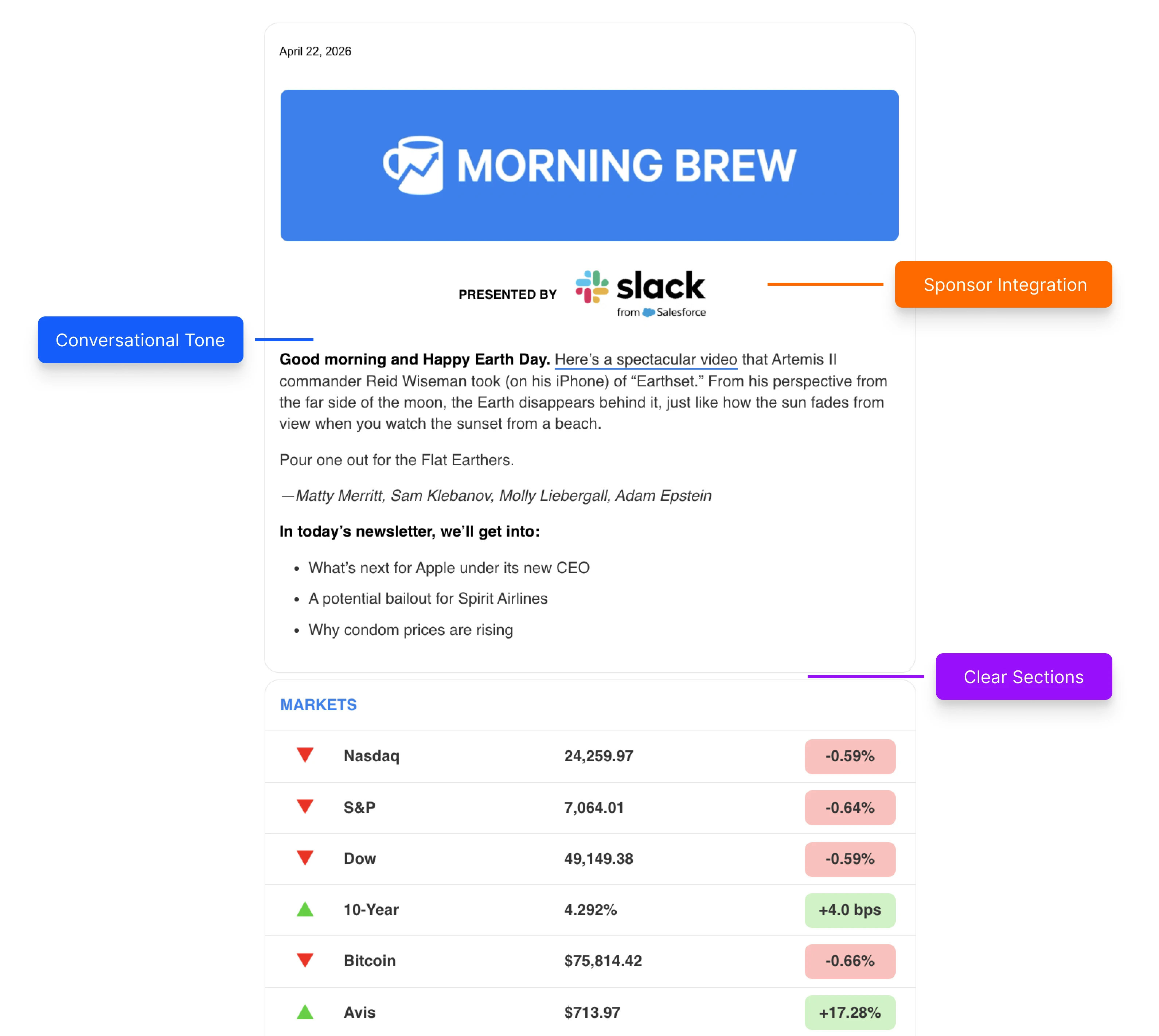
Curated or original content from a publisher or thought leader. Morning Brew for business news, The Hustle for tech. These read like a publication, not a promotion. The business model is usually sponsorship or paid subscriptions.
Creator / Personal Newsletters
Run by individuals on platforms like Substack or Beehiiv. Opinion-driven, personality-forward, built around a niche. Top creators earn six or seven figures from paid subscriptions — this format has turned "newsletter" from a marketing tactic into a business model.
Internal / Employee Newsletters
Sent within a company to keep teams aligned. Internal news, policy changes, team wins, culture updates. Not marketing — communication infrastructure.
Why Newsletters Matter
You own the audience. Social followers disappear when an algorithm changes or a platform declines. Your email list belongs to you. At SendX, we've watched businesses survive platform shutdowns, algorithm wipeouts, and ad cost spikes — because they had an email list they'd been nurturing consistently.
Direct inbox access. There are 4.73 billion email users worldwide (Statista, 2026). No single social platform comes close. And unlike a social feed, people actively open their inbox looking for messages.
Trust compounds. A single email gets ignored. A newsletter that shows up every Tuesday for six months makes you the first brand someone thinks of when they need what you sell. 59% of consumers say marketing emails influence their purchase decisions (Litmus, 2025).
Everything is measurable. Every send produces hard data — open rates, click rates, conversions, unsubscribes. You know what's working within 24 hours.
Revenue, directly and indirectly. Newsletters drive sales through promotions and launches, but the bigger play is long-term: brand awareness, trust, thought leadership. Some creator newsletters generate their entire revenue through subscriptions and sponsorships alone.
What Does a Newsletter Contain?
A well-structured newsletter has six elements:
Subject line: Determines whether your email gets opened. The best ones create curiosity or signal clear value in under 50 characters.
Header / Branding: Logo, brand colors, newsletter name. Builds instant recognition so subscribers know who the email is from before reading a word.
Body content: The core value — articles, tips, curated links, updates, commentary. This is why people subscribed. One to three topics per send keeps it focused.
Visuals: Images and graphics that break up text and reinforce your message. Too many can trigger spam filters; too few makes the email feel like a wall of text.
Call-to-action (CTA): What you want the reader to do next. Emails with a single CTA can increase clicks by 371% compared to those with competing links (Campaign Monitor).
Footer: Unsubscribe link (legally required), company address, social links.
How to Create a Newsletter (Step-by-Step)
Step 1: Define Your Goal and Audience
Answer two questions before you write a word: Who is this for, and what should it accomplish? A SaaS company might newsletter to reduce churn. A consultant might newsletter to stay top-of-mind with prospects. Your goal shapes content, frequency, tone, and what metrics matter.
Step 2: Choose an Email Platform
You need subscriber management, email design, sending, and analytics in one tool. Prioritize deliverability — a beautifully designed email that lands in spam is worthless. SendX includes drag-and-drop editing, automation, and segmentation at every tier — and delivers 95–98% of emails to the inbox. You can get started and send your first newsletter today. Try it free for 14 days — no credit card, cancel anytime.
Step 3: Build Your List
Start sending newsletters today
SendX includes drag-and-drop editing, automation, segmentation, and 1,500+ templates — with 95–98% inbox delivery. No credit card required.
Start 14-Day Free TrialYour newsletter is only as strong as the people receiving it. Add signup forms to your website, create a compelling reason to subscribe (exclusive content, early access, free resources), and promote across social. For businesses that want more control over branding and fields, an online form builder can create a customized signup experience that embeds directly into the website. Never buy email lists — they destroy deliverability and violate most platform terms of service.
Step 4: Design Your Layout
Single-column for mobile readability. Consistent branding. Clear headings. White space. About 60% of emails are opened on mobile, so test on a phone before you send. For a deeper dive, see our guide to email newsletter layout best practices. SendX includes 1,500+ templates if you want to skip the blank page.
Step 5: Write Content Worth Forwarding
Every newsletter should pass one test: would you forward this to a colleague? If no, the content isn't strong enough. One great insight beats five mediocre links. Curate ruthlessly.
Step 6: Set a Schedule and Stick to It
Pick a frequency you can maintain. A weekly newsletter that ships every Tuesday beats a daily newsletter that burns out after a month. Tell subscribers what to expect when they sign up.
Step 7: Send, Measure, Improve
After each send, check your metrics. A/B test subject lines. Segment your list — segmented campaigns see 14.31% higher open rates than non-segmented ones (Mailchimp). Watch which content gets the most clicks. Ask subscribers directly what they want more or less of.
Newsletter Examples That Work
B2B / SaaS: Lenny's Newsletter
Over 700,000 subscribers. Charges $150/year for premium — estimated $15M+ annual revenue from a one-person newsletter. Mixes original research with curated insights. Every issue delivers a single actionable takeaway — not a link dump.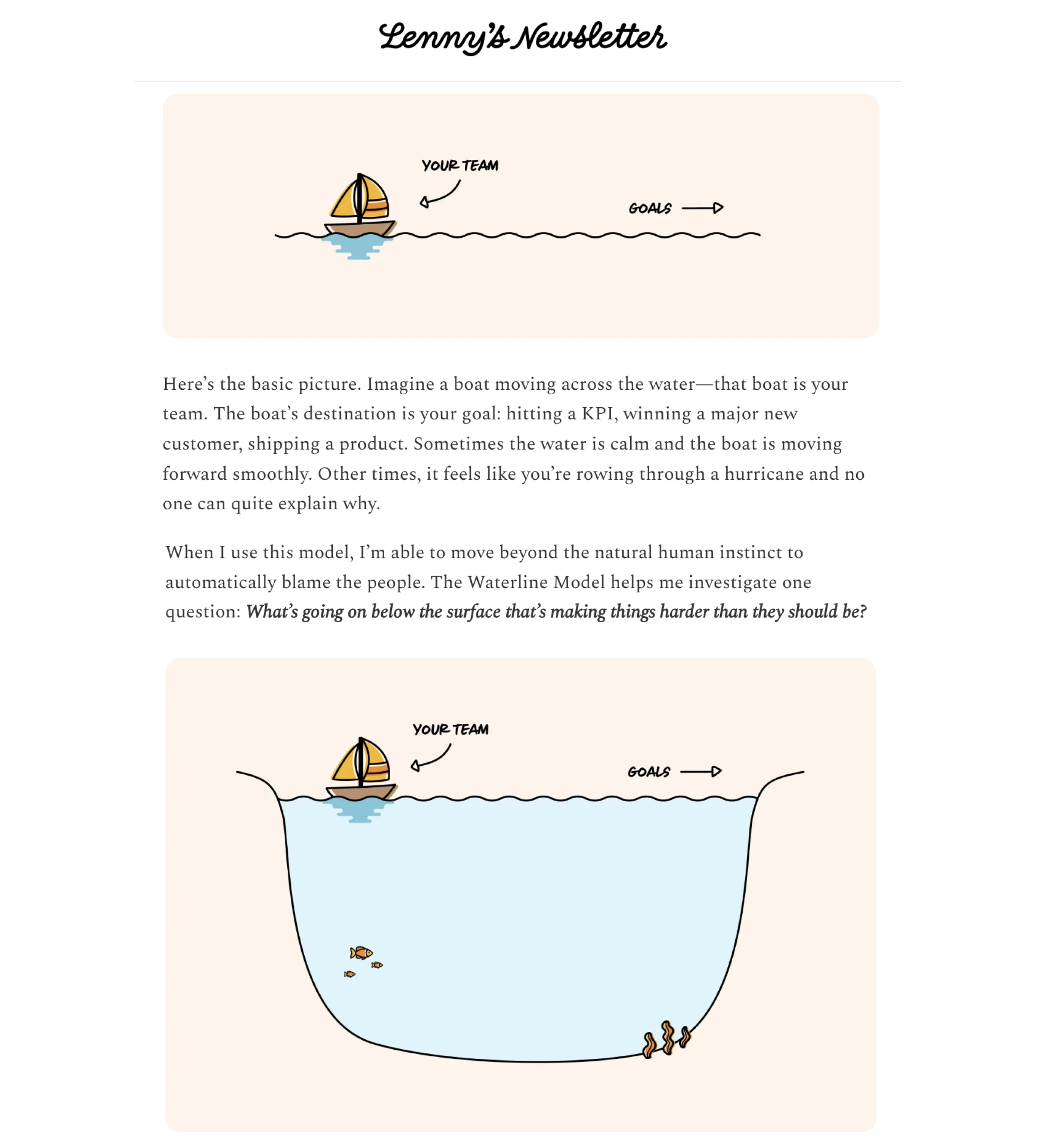
Media / News: Morning Brew
Grew from zero to 4 million subscribers in 5 years. Acquired by Business Insider for a reported $75 million. Daily consistency, conversational tone, and a built-in referral program that turned readers into a growth engine.
E-commerce / DTC: Hims
Clean design, product tie-in without being pushy, educational content that builds trust before asking for a sale.
Creator / Personal: Austin Kleon
Simple format (10 things a week), personality-driven, feels like a letter from a friend. Proof that production value isn't required — voice is.
B2B Product Update: Linear
Minimal design, focused exclusively on product changes, respects the reader's time. Under 2 minutes to read, every time.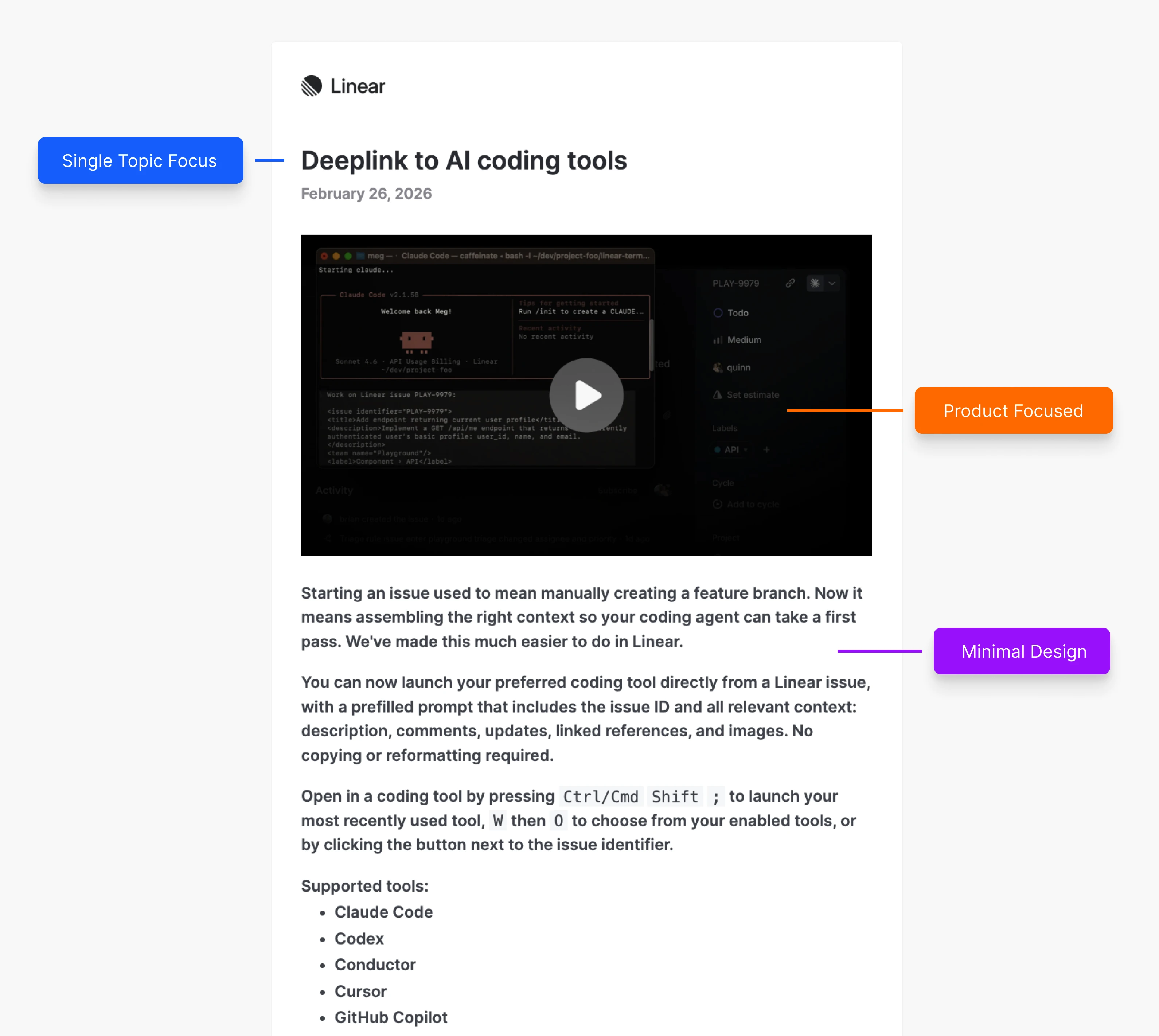
For a wider list, browse our roundup of the best newsletters across industries.
How to Measure Newsletter Success
Metric | What It Tells You | Benchmark |
|---|---|---|
Deliverability Rate | Whether your emails reach the inbox at all | 95%+ is what you need (SendX averages 95–98%) |
Open Rate | How many subscribers opened your email | 20–25% is typical (Campaign Monitor, 2025) |
Click-Through Rate (CTR) | How many clicked a link | 2–5% is healthy |
List Growth Rate | How fast your subscriber count grows (net of unsubscribes) | Positive month-over-month |
Unsubscribe Rate | How many opted out after a send | Under 0.5% per send |
Click-to-Open Rate | Clicks divided by opens — measures content relevance | 10–15% indicates strong content |
Your own historical data matters more than industry benchmarks. A 15% open rate that's climbing is better than a 25% open rate that's declining. Track trends, not absolutes.
Newsletter vs. Email Marketing: What's the Difference?
These terms get used interchangeably, but they're different things.
Newsletter | Email Marketing (Broader) | |
|---|---|---|
Purpose | Build relationships through valuable content | Drive specific actions (purchases, signups) |
Frequency | Regular schedule (weekly, biweekly, monthly) | Triggered by user behavior or campaigns |
Content | Educational, informational, curated | Promotional, transactional, behavioral |
Examples | Weekly industry roundup, monthly product update | Onboarding sequences, cart recovery, re-engagement |
Tone | Value-first, relationship-building | Action-oriented, conversion-focused |
All newsletters are email marketing, but not all email marketing is a newsletter. Email marketing also includes automated sequences, transactional emails, promotional blasts, and triggered messages.
Most successful email strategies use both. Newsletters keep your audience engaged between conversions. Campaigns drive specific outcomes when the timing is right.
FAQs
What is an email newsletter used for?
A newsletter delivers recurring value to subscribers — industry news, product updates, educational content, curated links, or thought leadership. The goal is building a relationship over time, not driving an immediate transaction.
Why is a newsletter important for my marketing strategy?
It gives you a direct, owned channel that doesn't depend on algorithms or ad spend. Email produces an average ROI of $36 per $1 spent (Litmus, 2025), and newsletters are what keep subscribers engaged between purchases.
What goes into making a successful newsletter?
A clear audience and purpose. An engaging subject line. Focused, useful content. A consistent schedule. A clean design that works on mobile. And — critically — a willingness to kill content that isn't pulling its weight. Quality over quantity, every send.
What is the difference between a crafted and curated newsletter?
A crafted newsletter contains original content you wrote — this drives traffic back to your website. A curated newsletter collects the best links and resources from around the web. Most successful newsletters blend both: original insight plus curated context.
How often should you send a newsletter?
Weekly is the most common cadence. Daily works for news (Morning Brew). Monthly works for research-heavy content. The most important factor is consistency — pick a frequency you can sustain, then show up every time.
What is a good newsletter open rate?
The industry average is 20–25% (Campaign Monitor, 2025). But your own historical average is the better benchmark — open rates vary by audience, topic, and list quality. Focus on the trend, not the number.
What is the difference between a newsletter and a blog?
A blog lives on your website and is found through search. A newsletter lands in someone's inbox. Blogs are pull — people find them. Newsletters are push — you deliver them. Many businesses repurpose blog content in newsletters and use newsletters to drive traffic to blog posts. They're complementary, not competing.
How long should a newsletter be?
Most successful newsletters take 3–5 minutes to read. For editorial newsletters, 500–1,000 words is typical. For curated link roundups, shorter is better. Don't pad content to hit a word count — respect your reader's time.
How do I know if my newsletter is working?
If your open rate is stable or climbing, your unsubscribe rate is under 0.5% per send, and you're getting replies or clicks, your newsletter is working. If all three are declining, the content isn't matching what your subscribers signed up for — revisit your audience definition and test different formats.
