



Quick Answer
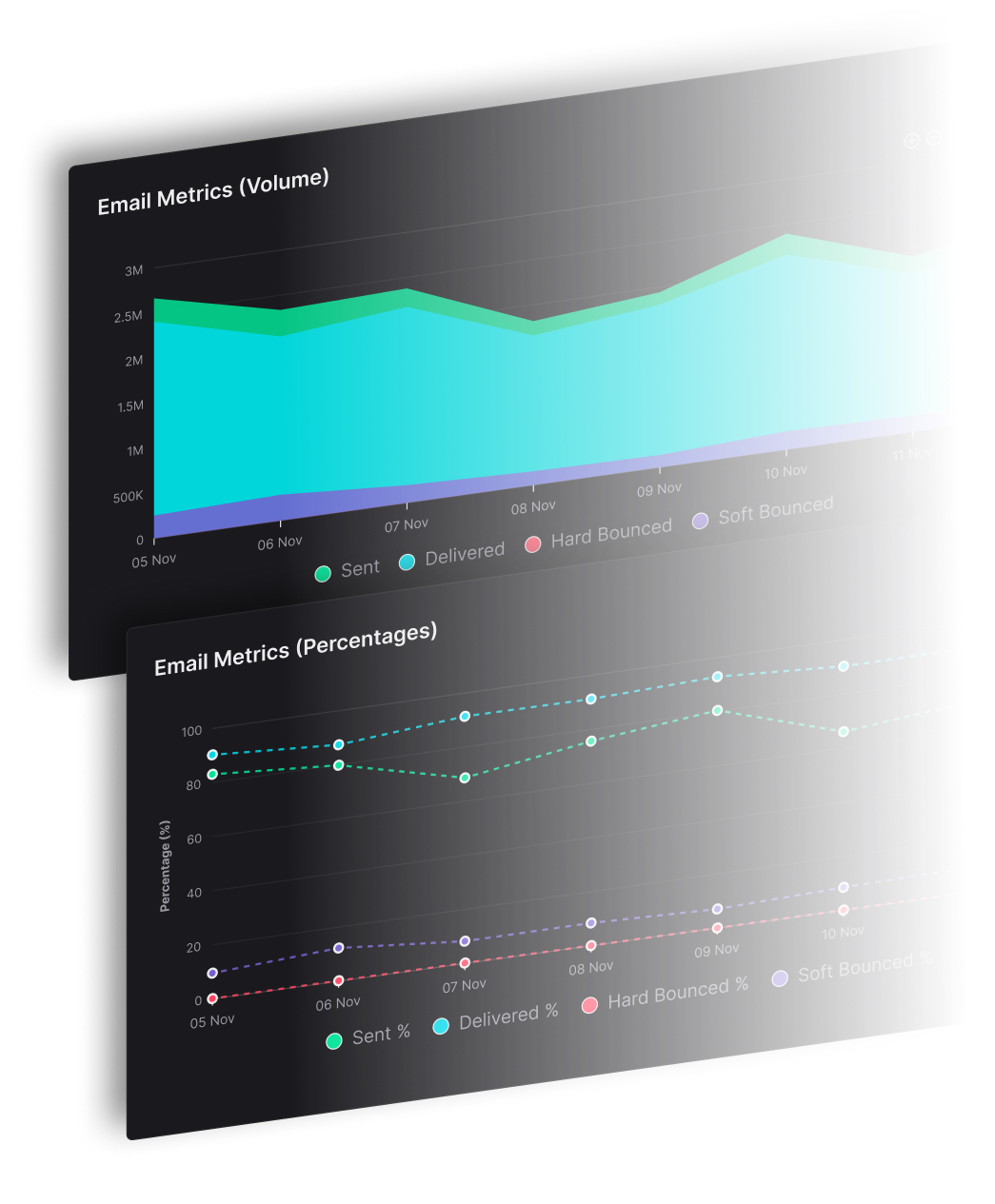
Most ESPs report deliverability as one blended number: open rate, bounce rate, delivery rate. Almost none break it out by mailbox provider by default, so a Gmail-specific throttling event or a Yahoo-specific spam-folder trend hides inside a “healthy” overall average until it has already cost you opens and revenue. A small number of sending platforms do surface the split automatically. SendX’s AI Deliverability Advisor is one: it sends a weekly breakdown of how your mail performs at Gmail, Yahoo, and Outlook, with plain-language suggestions for fixing whatever it finds, so you don’t have to reverse-engineer the split from support tickets.
Email deliverability is already difficult to manage. Mailbox providers like Gmail, Yahoo, and Microsoft don’t explain how they filter mail or why a message lands in spam instead of the inbox. That opacity is a given.
The real problem starts when ESPs make things worse.
Instead of surfacing the deliverability data that is available, many platforms hide it, flatten it into averages, or gate it behind internal teams and custom reports. When that happens, brands don’t just lose insight, they lose the ability to catch problems early, while they’re still fixable.
Below are the most important deliverability signals that disappear when ESPs don’t provide real visibility. We'll also show you how modern sending engines like SendPost and ESP like SendX have solved for this problem
Performance by mailbox provider disappears
One of the first things brands lose is the ability to see performance by mailbox providers.
Gmail, Microsoft (Hotmail, Outlook, Live), and Yahoo all behave differently. When ESP dashboards roll everything into a single delivery or engagement number, small issues at one provider stay invisible.
For many North American consumer brands, Microsoft domains alone make up around 10% of the list. If Microsoft starts throttling mail and that data isn’t visible, a brand can quietly lose inbox placement for that entire segment. At that point, even if everything else is working perfectly, the program’s performance is permanently capped.
Why “provider-level” is the number that matters most
LoriBeth (LB) Blair, SendWorks’ deliverability advisor, makes the case plainly. In her SendWorks AMA on email deliverability for newsletters, she explained that when she ran email for an e-commerce group sending around a billion emails a month, her team checked provider-level reports every single day, because the standing question behind every send is: is this me, or is this the mailbox provider? Without a provider breakdown, you can’t even ask that question. You just see a number move and guess.
That’s the gap a provider-level report closes. It turns “delivery dipped” into “delivery dipped at Yahoo specifically, starting Tuesday,” which is a problem you can actually go fix.
Which platforms actually show you this
Rolling deliverability into one number isn’t a technical limitation. Most ESPs simply don’t build the provider-level view. SendX’s AI Deliverability Advisor is a $100/month add-on built to close this gap: once it’s on, a fresh report lands every Monday, breaking performance out by Gmail, Yahoo, and Outlook and answering the key question of whether a delivery problem is coming from one provider or all of them. Pair it with Inbox Testing for pre-send placement checks and you get the same “is it me or is it the provider” split LB checks daily, without stitching together five different tools to answer it.
This is the same infrastructure shift the rest of this article covers below. SendX moved its own sending engine to SendPost for exactly this reason: aggregate dashboards can’t tell you which provider is throttling you, and by the time it shows up in your open rate, you’ve already lost placement.
Early warning signals arrive too late
Deliverability problems compound over time.
The longer mail lands in spam, the more confident spam filters become that it belongs there. That’s why catching issues early matters so much. Without visibility, teams miss the early signals and only react once inbox placement has already collapsed.
This is like “ice skating uphill.” Once reputation damage accumulates, recovery becomes far harder. Even if the original issue was small and short-lived.
Unsubscribe behavior loses its meaning
Gmail doesn’t tell senders who clicks “mark as spam.” Because of that, unsubscribe rate often becomes the best available proxy signal.
When ESPs don’t show unsubscribe behavior by mailbox provider, teams lose a critical indicator of trouble. List bombing, abuse, or sudden audience mismatch can all show up first in provider-specific unsubscribe spikes. Without segmentation, those signals get lost in overall averages.
Bounce problems get buried in aggregates
Aggregate bounce rates are misleading.
A platform can show a “healthy” overall bounce rate while a single campaign or automation is failing badly.
LoriBeth (LB), an email expert shared this experience with us:
“I was finding a 30% bounce rate in the first email of an abandoned cart series. It's an issue that had gone unnoticed because no one could easily see bounce data at the campaign or provider level. Without detailed bounce logs, ESPs miss throttling events, misconfigured flows, and transactional failures until they start affecting revenue and sender reputation.”
Email stops functioning as business intelligence
When raw deliverability data is hidden or gated, email loses one of its most valuable roles: acting as an early warning system for the business.
In one case LB describes, downstream email data revealed low-dollar credit card fraud. Fraudsters were testing stolen cards using purchases under $5, which generated large volumes of bounced and algorithmically generated email addresses. Email data made the pattern visible, and helped explain rising credit card processing fees across the business.
Without access to that data, the issue would have persisted quietly and grown more expensive.
The deliverability data most often hidden
These are the signals we see disappear most often when ESPs control visibility:
Mailbox-provider-level performance (Gmail vs Microsoft vs Yahoo)
Soft bounce and throttling patterns by provider
Inbox placement degradation before it reaches zero
Unsubscribe rate segmented by mailbox provider
Bounce logs tied to specific campaigns or automations
Abnormal behavior in transactional flows like abandoned cart emails
Signals pointing to list bombing, fraud, or abuse
Time-based changes tied to infrastructure or sending behavior
Visibility isn’t optional anymore
The core issue isn’t that this data doesn’t exist. It’s that many ESPs choose not to surface it.
When deliverability teams can’t see what’s happening, they’re forced to guess. Problems go unnoticed until they’re severe. Reputation damages compounds quietly. Revenue takes a hit long before anyone realizes why.
Email is hard enough already. Platforms that hide deliverability data don’t make it simpler, they make it riskier.
What SendX changed to fix the visibility issues with their email sending
A fair question at this point is whether this level of visibility is even realistic for an ESP.
It is, but it usually requires changing the sending layer itself.
This is exactly the transition SendX went through.
As SendX scaled, they ran into the same problems most ESPs do: limited visibility, slow root-cause analysis, and too much time spent stitching together data from different tools.
They were using cloud MTAs like SendGrid and Mailgun. The mail was going out, but when delivery dipped, it was hard to answer basic questions quickly.
What changed was the decision to move the sending engine itself.
SendX migrated its sending infrastructure to SendPost. With SendPost underneath, SendX got the ability to:
See delivery behavior by mailbox provider instead of relying on rolled-up averages
Track domain and IP reputation alongside real SMTP errors
Identify the root cause of delivery dips without pulling data from five different tools
Control sending speed, throttling, and routing across IPs without manual server work
Automatically warm up and back off sending based on live performance signals
In other words, the system stopped saying “delivery dropped” and started saying “this is what broke, here’s where, and here’s what we’re doing about it.”
That change also altered how SendX operated as an ESP.
Support teams could prioritize faster. Deliverability teams didn’t have to guess. Account teams could explain issues
instead of deflecting them. And problems were fixed earlier, before they compounded.
Related reading
For the delivery and inbox-placement targets these provider splits should hit, see what a good email deliverability rate looks like by sending type.
If your marketing and transactional streams share a domain, a provider-level dip on one stream can drag both down. See why separating transactional and marketing email protects the one that’s working.
Authentication is the baseline every provider checks before anything else. If that’s not locked down yet, start with SPF, DKIM, and DMARC setup.
For the broader picture of what “good” looks like across metrics, see the email deliverability guide.
If you’re diagnosing a placement drop right now, inbox deliverability walks through the triage steps.
See what real deliverability visibility looks like with SendPost. Talk to us here.
